A fire in National City is put out by the city's own fire department. What happens to the house after that is up to the owner: boarding it up, getting the smoke and soot out, and rebuilding what burned. Our main page on fire damage restoration explains that whole sequence step by step. This page covers what is particular to National City.
Fire in National City: the numbers
The National City Fire Department publishes a count of what it answered. Its figures for calendar year 2023 are below, beside the Census Bureau's figures for the city itself.
| What was counted | Figure | Source, and the period it covers |
|---|---|---|
| Residential fires | 31 | National City Fire Department, calendar year 2023 |
| Other structure fires | 8 | National City Fire Department, 2023 |
| All fire responses, including vehicle, rubbish and grass fires | 269 | National City Fire Department, 2023 |
| Total fire loss | $1,652,854 | National City Fire Department, 2023 |
| All incidents, fires and medical calls together | 8,253 | National City Fire Department, 2023 |
| Population | 56,173 at the 2020 Census; an estimated 58,460 in July 2024 | U.S. Census Bureau, QuickFacts |
| Homes lived in by their owners | 34.7% | American Community Survey five-year data for 2020 to 2024, via QuickFacts |
| Housing in single-unit buildings | about 49% | American Community Survey 2024 five-year estimates, as republished by Census Reporter |
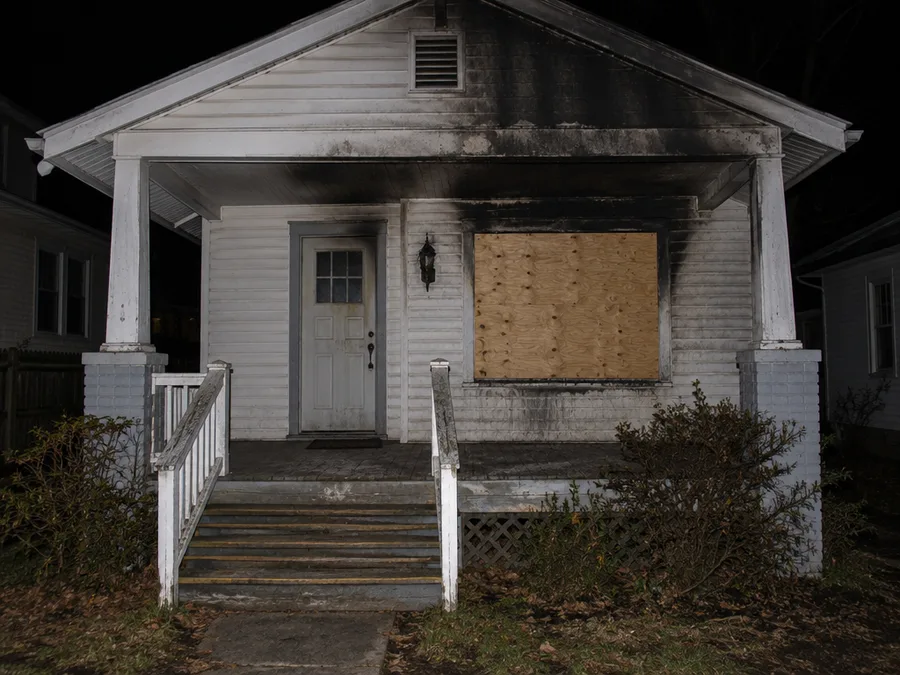
Thirty-one house fires in a year works out to about one every twelve days across the city.
Two numbers in that table shape what happens next. Only about a third of homes in National City are lived in by their owners, so many are rented. After a fire in a rented home, the owner of the building and the tenant each have a loss to deal with. And nearly half of the housing is in buildings with two or more units, where smoke from one home can reach the next.
Older houses in National City
The city library's local history room dates National City's founding to 1868 and Frank Kimball, and describes a past of olive and citrus orchards and grand Victorian homes. Four National City properties are on the National Register of Historic Places, according to the city's planning pages: Brick Row, St. Matthew's Episcopal Church, Granger Music Hall and the Santa Fe Depot.
That age matters after a fire for two reasons.
The first is paint. The U.S. EPA says about three-quarters of American homes built before 1978 still contain some lead-based paint. Its Renovation, Repair and Painting rule requires anyone paid to disturb painted surfaces in those homes to be certified and to follow lead-safe practices. The rule has an emergency provision for work that has to happen at once to protect people or property. The EPA also says that once the emergency part of a repair is done, the rest of the work returns to the rule's normal requirements.
The second is asbestos. The San Diego County Air Pollution Control District adopted Rule 1206 on November 15, 2017, covering asbestos removal, renovation and demolition, and lowered the amount of asbestos material that triggers the rule from 160 to 100 square feet. The district's advisories list the building materials that may contain it: popcorn ceilings, ceiling tiles, insulation on furnaces and air ducts, pipe wrap, flooring, roofing, and insulation in walls and attics. Whether a particular house needs testing is a question for the restoration company and, where the rule applies, the air district.
A historic listing adds a third layer. The city runs a Mills Act program, authorized by the City Council on May 7, 2002, that lowers property taxes for owners who agree to restore and preserve historic buildings. Its planning page also says that two chapters of the municipal code govern relocating or demolishing any historic structure on a national, state or local register. After a serious fire in a listed house, that is worth knowing before anyone talks about tearing it down.
Permits for fire repairs in National City
Rebuilding after a fire is construction, and National City's Building Division treats it that way. Its permits page lists three that come up after a fire:
- a building permit, required to construct or modify a building or structure;
- a combination permit, where the work involves several trades, which covers the building, electrical, plumbing and mechanical work for the job;
- a demolition permit, required to demolish any building or structure.
Owners of one- and two-family homes can take out permits themselves if they live in the house or intend to, and do the work themselves or hire people to do it. The same page warns that a permit becomes void if work does not start within a year of issue, or stops for a year after it starts. For a house waiting on an insurance settlement, that one-year clock matters.
Fees come from the city's Master Fee Schedule, which the City Council adopts by resolution after a public hearing. The city lists one schedule running to June 30, 2026 and another from July 1, 2026. We could not read the dollar amounts in either, so this page does not quote a figure. The building inspections page lists the stages an inspector checks, from framing, which includes fire blocking, through to the final inspection when the building is complete.
Cleaning soot off walls and ceilings that stay in place is cleaning. Replacing burned studs, rewiring a room or rebuilding a kitchen is the kind of work those permit rules describe. Our fire damage restoration cost page sets out what each kind of work adds to the bill.
The National City Fire Department
The department traces itself to the National City Firemen's Club, a volunteer group formed on September 10, 1887. It became a fully paid department in 1935. Today it describes serving more than 63,000 residents across nine square miles from three fire stations, as well as the Lower Sweetwater Fire Protection District, the Port of San Diego and Naval Base San Diego. In 1980 the city moved its fire dispatching to the Chula Vista Police and Fire Dispatch Center, according to the department's own history.
Its mission statement puts the job plainly: prevent fires where it can, and when one happens, confine it and put it out while limiting further damage. Its Fire Prevention Division lists fire investigations among its programs, along with a free smoke detector program. New smoke alarms belong in any rebuilt house, so that program is worth asking about.
The department also runs weed and brush abatement through a contractor. Its page says the service is mostly there to protect nearby structures and wooden fences from fire.
Smoke and soot in a National City home
Smoke does not stop at the room that burned. In an apartment building or a duplex it can reach units where nothing caught fire, and the residue it leaves is oily and hard to shift. The soot removal page explains how that cleaning is done and what can be saved. Fire damage restoration, soot removal and the rest are listed together on our services page.
If an insurance claim is part of the picture, the California fire insurance claim guide explains how smoke and fire claims work in this state.
How a request from National City works
Use the form on this page. Say what burned, which rooms the smoke reached, whether the house is secured, and how you would like to be contacted. We then connect you with a restoration company serving National City. If anyone is hurt, call 911 first.